Laboratory Software in Nepal: From Order to Verified Report
A laboratory information system (LIMS) is judged on one thing: does a test move cleanly from order to sample to verified report? Here is what lab software in Nepal must handle, and where results go wrong.
A laboratory lives or dies by one property: a result that is correct, attributed to the right patient, and verified before it leaves the building. Everything a laboratory information system (LIMS) does is in service of that. When lab software fails, it rarely fails loudly — it fails as a result on the wrong patient, a report sent before verification, or a sample nobody can account for. This guide covers what lab software in Nepal actually has to handle.
The chain that must never break
Every lab test is a chain, and the software's job is to keep every link attributable:
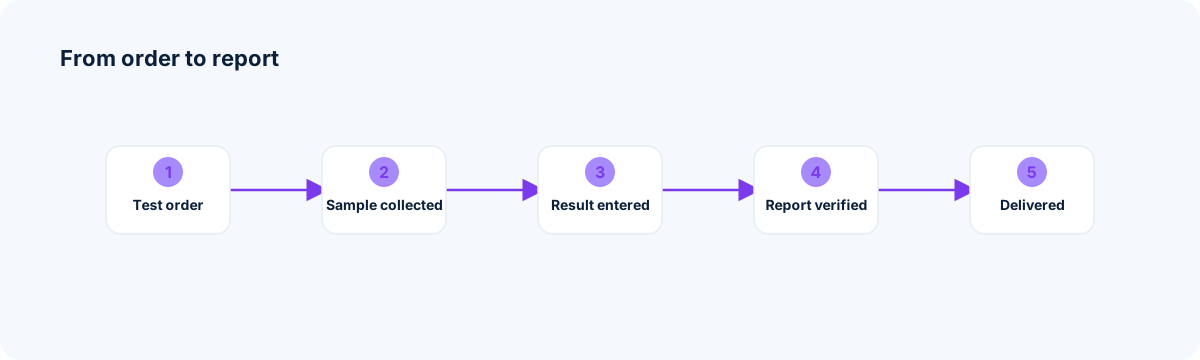
If any step is done on paper and typed back in later, that is where a result lands on the wrong patient. The system has to own the whole chain, not just the reporting at the end.
Orders: structured, not free text
A test order is not a note. It is a structured request — which tests, for which patient, referred by whom, against which sample type. Structured orders are what let the lab batch work, route samples to the right bench, and later reconcile "what was ordered" against "what was resulted". Free-text orders quietly lose all of that.
Samples and the accession number
The moment a sample is collected it needs an accession number — a unique, barcoded identity that follows it through the lab. This is the single most important anti-error control a lab has: it decouples the sample from the paperwork, so a mislabeled form cannot put a result on the wrong patient. Any serious LIMS makes the accession number central; a weak one treats the patient name as the identifier and inherits every spelling mistake.
Results and reference ranges
Entering a result is only half the job. The system has to hold reference ranges so an out-of-range value is flagged at entry, not missed. Ranges vary by age and sex, and a good LIMS applies the right one automatically. This is a safety net for the technician and a signal for the clinician reading the report.
Verification: the step people skip
Here is where cheap lab software cuts the corner that matters most: it lets a result become a report without a verification step. In a real lab, a result is entered by one person and verified by another (or the same person, deliberately, as a separate action) before it is released. That gate is what stops a fat-fingered value going out under the lab's name. A LIMS worth buying makes verification a required, recorded step — not an optional nicety.
Delivery and the connected report
Once verified, the report has to reach the patient and the referring clinician quickly and legibly. In a connected platform, a report ordered during a hospital or clinic visit flows back to that visit and that bill automatically — no re-keying, no separate delivery. A standalone lab app leaves that hand-off to a person, which is a person who can forget.
A checklist for lab software
- Are orders structured, tied to patient and sample type?
- Does every sample get a unique accession number?
- Are reference ranges applied and out-of-range values flagged at entry?
- Is there a required, recorded verification step before a report is released?
- Do reports flow back to the originating hospital/clinic visit and bill?
- Is it priced and billed in NPR?
Where CareSewa fits
CareSewa's Laboratory ERP models the full chain — structured orders, accessioned samples, results against reference ranges, a verification gate, and delivery — so a result is correct and attributable before it leaves. On one platform with the Hospital and Clinic ERPs, ordered tests and their charges connect to the visit automatically. For the bigger picture on connected billing, see our hospital software buyer's guide.
Talk to us about your lab, or browse the ERP suite.
Frequently asked questions
What is a LIMS?
A LIMS (Laboratory Information Management System) is the software that runs a laboratory end to end — structured test orders, sample tracking by accession number, result entry against reference ranges, a verification step, and report delivery. Its whole job is to keep every link in that chain attributable so a result is correct and tied to the right patient before it leaves the building.
Why is an accession number important?
The accession number is a unique, barcoded identity given to a sample the moment it is collected. It decouples the sample from the paperwork, so a mislabeled form cannot land a result on the wrong patient. It is the single most important anti-error control a lab has — weak software that uses the patient name as the identifier inherits every spelling mistake.
What does result verification mean in lab software?
Verification is the required gate where a result is checked and signed off before it becomes a released report — typically entered by one person and verified by another (or as a deliberate second action). It is the step cheap software skips, and it is what stops a fat-fingered value going out under the lab's name. A LIMS worth buying makes verification mandatory and recorded.
Can lab results connect to a hospital or clinic bill automatically?
On a connected platform, yes. In CareSewa, a test ordered during a hospital or clinic visit flows back to that visit and its bill automatically once verified — no re-keying and no separate delivery step that a person can forget.
See it on your own workflow
CareSewa runs ten healthcare ERPs on one no-code platform. Book a walkthrough for your hospital, clinic, pharmacy or lab.